1. Steve Jobs and perfectionism
Steve Jobs, when designing the iMac personal computer, concealed each cable outlet inside a nifty hatch-type window. Snug towards the back, this panel kept every complex internal hardware component beyond your reach. No ugliness visible; only stylish, transparent plastic and a friendly user interface. This aesthetic appeal transformed Apple into an innovative prospect again. Two front-facing stereo speakers symmetrical on either side. A thin disc drive slot smile right beneath the 15-inch display. That computer stunned. I know. My parents owned two. They were my first gadgets. Flashy accent colors decorated their tubular construction – blueberry and lime green. Marketing wizzes sold gumdrop-shape desktops through minimalist advertisements. You would think they were selling handbags.
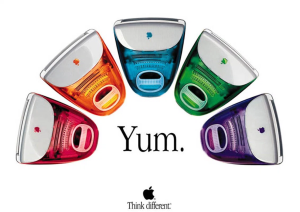
Within 12 months of their 1998 launch, more than 800 thousand people bought these designer toys, 32% of whom never before purchased their own computers. My mom and dad fell into this category. They always considered themselves Mac people, whatever that means.
Some weeks back, Sony Pictures released a biopic of Jobs to critical acclaim and financial disappointment. Still, an Oscar contender and intense adaptation, my family caught the film at a newly renovated theater nearby called ‘Broadway Multiplex Cinemas’. Inside this mall, which hosts a mixed bag of luxury outlets and chain wholesale shops like Target, we ride an escalator upstairs. Beyond a small indoor playset where children lick and kick each other, their parents moderately paying attention, we pass some food court restaurants, where folks are dining with red trays on Arby’s curly fries and Panda Express orange chicken, and head into the dimly lit movie rotunda. Tickets already printed, we ignore the obnoxiously long line, force open a heavy glass door, walk down several stairs and hand over the computer paper.
Throughout the viewing I kept shaking my head in disbelief. Danny Boyle, the director, decided to organize the movie into three acts, each depicting a different product launch. Early into Steve Jobs, there is a scene in which Michael Fassbender, who portrays the innovative Apple founder, aggressively commands a programmer to fix the faulty demonstration. So these characters, twenty minutes before they were to reveal their original Macintosh, discover an error. Jobs wanted the machine to say hello, and it was being shy. While adjusting his necktie and brushing his air, Fassbender is violently lecturing to this very capable programmer, with every minor, insignificant personnel watching this scene unfold, observing their leader throw a fit about why this computer must speak. There are three levels here, and each amazed me equally.
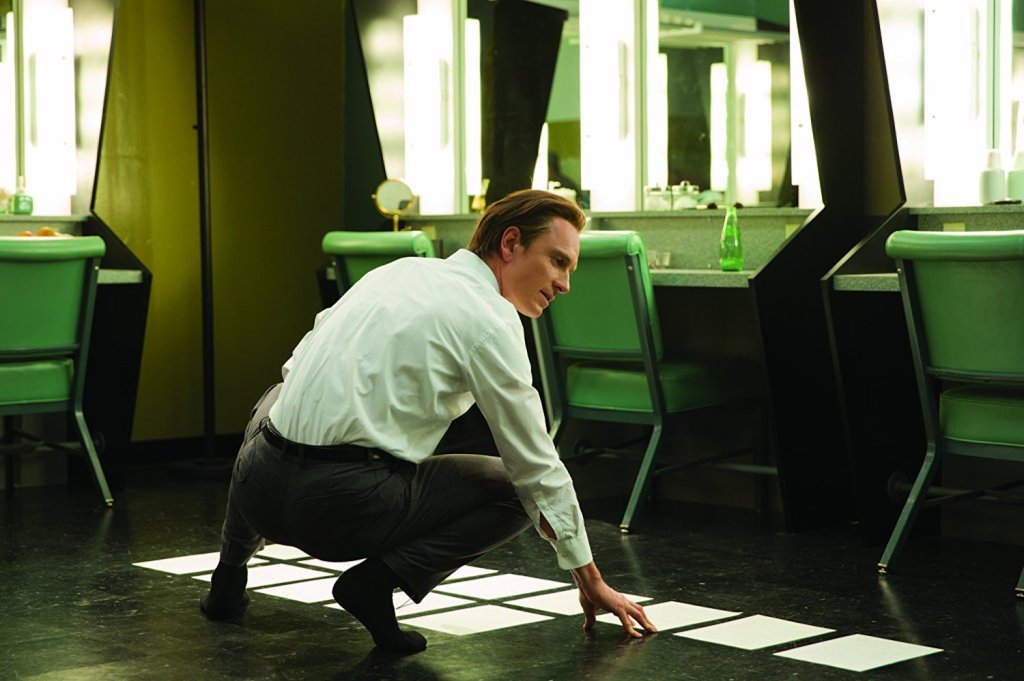
Most broadly, Jobs wants to make a statement to Microsoft and the entire tech community. Then there is the selfish motivation – to set himself in history as a pioneer. Though ultimately, Jobs, a meticulous person, believes that each detail matters, that without a talking toy, everything would be ruined. Fassbender enters an elevator, looks directly into the camera, evens a natural smile and gestures a finger gun blowing his brains out.
The doors close and I am struck with familiarity, having just observed the realest representation of my nature. I often forget that I am exactly like everyone else, filled with blood and lust, humility and ambition. Yet I am also different, uniquely particular like Steve Jobs. I believe nothing is ever neat enough, adequately conceptualized nor presentable to others. In my daydreams, perfection decorates every ounce of thought. Tudor roof. Wrap-around porch. In late winter, with pine trees outside my window, I am composing a pointed sociopolitical op-ed from an antique desk, my children downstairs watching cartoons.
2. Room and belonging
Sky blue paint coated my childhood bedroom walls. I remember playing eye tricks while laying on my sport-blanket bed, squinting an eye partially open as to obscure my perception of distance, then crafting shapes of the cloudy ceiling with my right pointer finger. Approximately ten build-a-bears – mostly wearing athletic gear – lived atop my bed-frame edge in harmony with me, their permanent roommate. Custom built oak furniture fit the space exactly right. Shelves could be adjusted at ease. This allowed plenty of room to display Lego sets and baseball card collections, photos from family vacations to Jamaica and ordinary knick-knacks, like a glass container filled with seashells and spin artwork. I never recall creating imaginary friends and rarely felt cramped. I always dreamed about being old, free to peruse my own landscape, explore what lives outside.
A couple of days back I darted outside of Jacqueline Bouvier Kennedy Onassis Hall about five minutes before 7 o’clock. Welcomed by a clear, black sky and fair wind, I trudged past some Pennsylvania Avenue eateries with ampersands in their names – Devon & Blakely sandwich shop and Burger Tap & Shake – until I reached that glorious statue of George Washington which marks end of campus. Suddenly, I felt an impulse to run. My brain wanted me to shift gears, to throw my full mental and physical force behind acceleration. Only a couple blocks from West End Cinema, I thought, time to go. Mostly empty streets on this late friday evening, I sprinted by a handful of hotels already adorned with Christmas wreaths and broke my stride when a red traffic hand signaled me to stop. I waited. Regained my breath. Then proceeded onto my destination.
Unlike my Long Island viewing of Steve Jobs, which took place in a palatial room filled with leather recliners spaced comfortably throughout, ample wiggle room between them, this time around my accommodations were more conservative. Stiff cushions on traditional folding chairs and a regular projector screen setup created a low-key atmosphere, an appropriate fit for the indie film in my immediate future: Room. I bought my wallet-size ticket before a healthy balance of big-budget and small-scale previews washed over me. Every one piqued my interest: A stop-motion animated picture featuring a businessman perplexed by ordinary and routine; two lesbians struggling to connect in a period piece when these feelings are taboo; Michael Caine playing a retired composer determined to feel young again. I slouch as much as possible and set my Android phone to silent mode while another layer of lights turn to black.
Jack begins narrating. This young boy is simply describing what he knows. His home. A camera swoops under a sink, peeks into the wardrobe where Jack sleeps, and continues following the boy. We are introduced to every object which Jack values inside this small room, including Dora the Explorer and a beige striped blanket. Then we meet Ma, played by rising star Brie Larson, who asks her son to help crack an egg for the birthday cake she is making despite the limited resources at their disposal. Five-years old is a big deal in their household because Ma is ready to begin speaking honestly to Jack. No more lies. Instead, hard truth as to why their only window into the world comes from a skylight. I immediately feel reminded of Samuel Beckett. This is a theater-of-the-absurd drama, I tell myself.
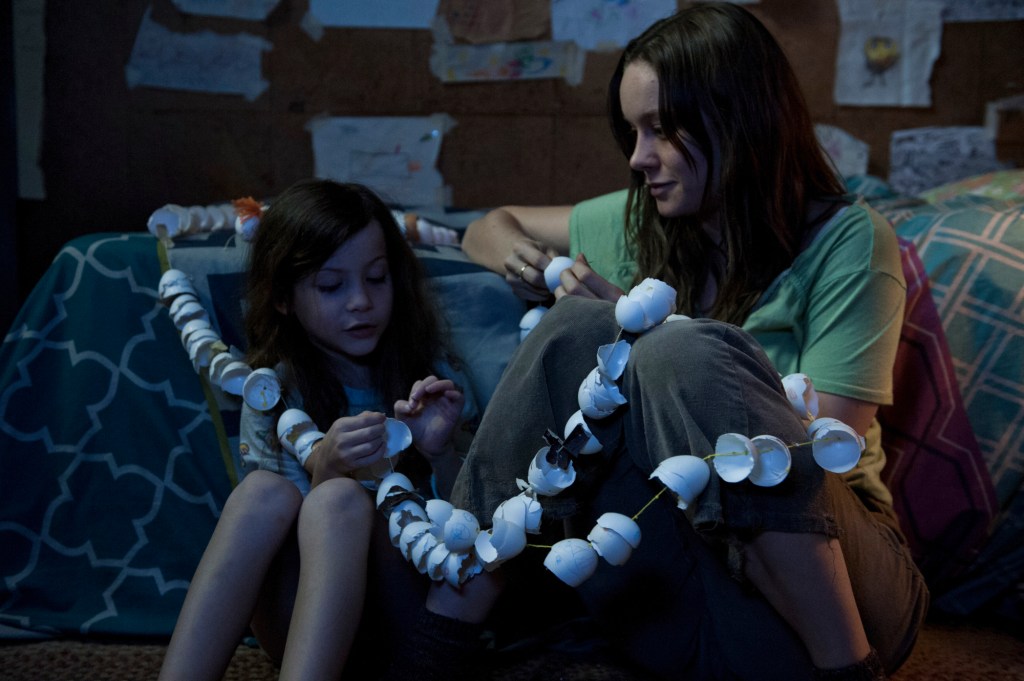
They live in a garden shed, trapped there by a bearded predator whom they only refer to as Old Nick. Nick installed some high-tech equipment in this backyard creep hole. A passlock combination is required to open the heavy steel door which separates Ma and Jack from fresh air, fall leaves and humanity. Ma begins explaining to Jack that what exists outside ‘Room’ is a beautiful world inhabited by caring people, including actors from the television set – which Jack honestly believes is a portal to another universe – and grandma/grandpa. For seven years, Joy Newsome has suffered. She tried escaping before by hiding behind the metal entrance. When Nick entered, she smacked him over the head with the toilet cover. No luck. Grabbed at the wrist, and beat down into submission.
We are about a half-hour into events now. The rest of the film depicts their escape and subsequent readjustment and immersion into society. Roll. Three stop signs. Jump out and run. Watching this play out, I became swamped with emotion. Jack, portrayed by budding young actor Jacob Tremblay, perfectly represents the transition from complete naivety to maturity. In my case, this year represents a step into adulthood, major growth. Everyday I cook a meal for myself. I balance my own money from working summer jobs. I am building relationships with people that I want to maintain, to place them in my pocket for easy access. I feel extremely welcome. Lucky. Simply lucky. This world is infinitely larger than my childhood bedroom walls.
3. Inside Out and family
My mother, an art major, considers Renoir her favorite painter. After traveling to the Metropolitan Museum of Art with my grandma two years ago, I brought home a collection of Monet artwork, quality impressionist prints of garden scenes and other famous landscapes. Mom remarked, “while I prefer Renoir, I love Monet too.” This is my mother: independent and kind. She leads a nursery school class in town. Before transferring to education she balanced part-time jobs with accommodating my little brother and my busy social activities. Little league baseball is a killer; ask any parent. Hotel management served as her gig for a while. In other words, she handled check-ins before shifting paths to dealing with stinky diapers and crying two-year-olds.
She met my father through mutual friends, when she held a job selling luxury jewelry in New York City. They went on a blind date and clicked. Dad had recently accepted a junior high school position teaching music in Manhattan. He played instruments. Quite well too. Last December break I decided to completely reorganize the basement, and in removing dust from each crevice, I found a photo album from when my 17-year-old father traveled to Rome with a professional orchestra. Michael played the trumpet. Raised on a sizable plot of land in suburban Centerport, New York with an older brother and sister, my dad always acted against the grain. Both siblings became respectable attorneys in highly regarded practices. They both married people from law backgrounds and gave birth to children who, by their established logic, will inevitably cancel their projected career paths to begin studying the Constitution.
I suppose everyone traces their complexities back to their parents. From my father I inherited curly black hair and blurry vision, and a compulsiveness reminiscent of Jobs. I am learning day by day how to effectively manage my perfectionist tendencies. This sight problem, however, is only temporarily alleviated when I place thick-framed, dark plastic glasses on my face. What a drag! I tried inserting contact lenses into my eyes prior to graduating from high school. Some ophthalmologist worked with me on looking forward, and touching my corneas without flinching back from sensitivity. Nothing. I am stuck with these rectangular rims. To refocus, my mother bestowed on me an unparalleled appreciation for beauty and her go-with-the-flow attitude.
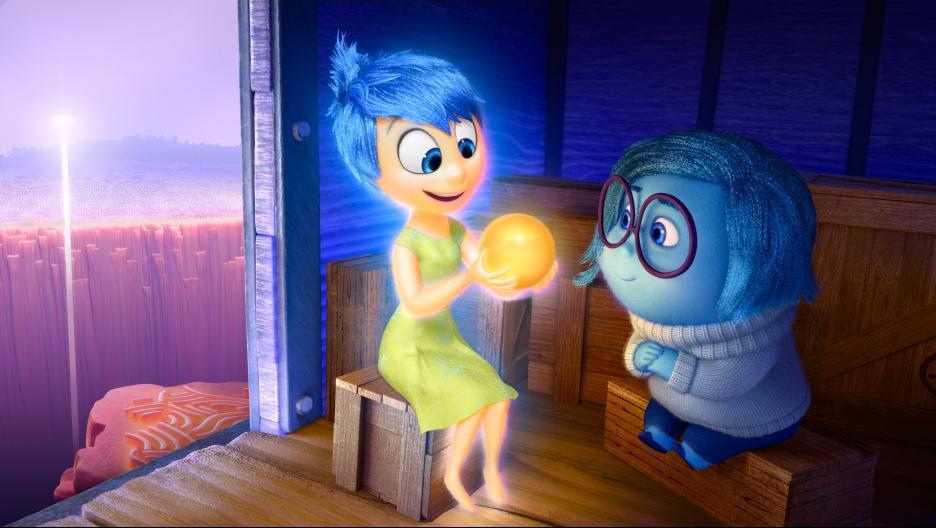
Somewhere online two years before Inside Out would be released, I read a short excerpt describing the premise of an upcoming Disney film: A young human girl named Riley adjusts to moving from a small rural town to big city San Francisco. And the angle which Director Pete Doctor pitched: trying to grasp the emotions inside her head. Pixar is a world-renowned production studio because they tell powerful stories. A toy cowboy and space captain fight over the attention of their owner Andy, who is simply outgrowing them; tasked with clearing debris from baron Earth, a boxy robot reconnects with man, convincing them to return and rebuild humanity. These films are musically well assembled and visually striking, ingenious in their use of color and shape. Most importantly, they sell narratives that connect with audiences young and old for entirely different reasons.
4. Spotlight and ambition
Sweat started sticking to my neck. And bugs, annoying flies from hell, buzzed around my right ear. Then when I tried swatting them, the darn things switched sides, like some tennis players or something mid-set. You ever try wheeling a plastic wheelbarrow before? Actually, let me rewind.
Six summers back, before entering the eighth grade, my mother forced me to get a job. A long time friend of hers suggested this summer camp. And while I preferred staying home and taking advantage of my own time, Mom refused, called up the place and later brought me into the office building where they plan activities, fill out paperwork, get busing routes together and so on.
Standing in the office of my future employer really unimpressed me. I was disinterested. Not even that. I kind of assumed my mother would talk to the guy. She wanted me to have the job, so I sort of figured she planned on handling that end: the negotiating. This is a week before camp starts, by the way, but of course the dude was hiring. Come on! None of these places have enough staff. And then abruptly, as I was looking around the room, exploring the decor and all, the bald-headed businessman turned towards me and asked in a sny way, hey, what are you looking at? “Nothing in particular.” I wish I said that. My heart sunk, I blinked at him, shrugged my shoulders like some careless punk, and realized immediately that work would not be fun.
I barely even saw the kids. We played cards at picnic tables in between watering plants and serving lunch. Really exciting, right? I avoided using my phone, though. It felt disrespectful. They called us “supply guys” but if you were to actually assign a title to us, a better one would be “water cooler delivery people” because most of our labor involved trekking across the grounds lugging three 20 lb. jugs of H2O by broken wheelbarrow. Yeah that is what I meant before. Plastic, junky, neolithic-era machines. We would drop off these orange mega containers with giant lids throughout the camp to hydrate the thirsty children. This was my training year. No pay. That is what Mom negotiated. I probably should have brought in a professional.
Naturally, both my parents being teachers, I figured working with children would be up my alley. And in upcoming summers, when mean bossman actually gave me a counselor job, I realized that leading a group of 16 ten-year-old boys is both a challenging and fulfilling responsibility. Ultimately, though, I came to debate whether serving as an educator professionally would satisfy my immense ambitions. Likely no. A couple of months back I officially declared myself a Political Science major with the intention of minoring in Journalism and Mass Communication. College students like me, I notice, are perpetually forced into a conversation about their life plans. Well, this seems to be mine.
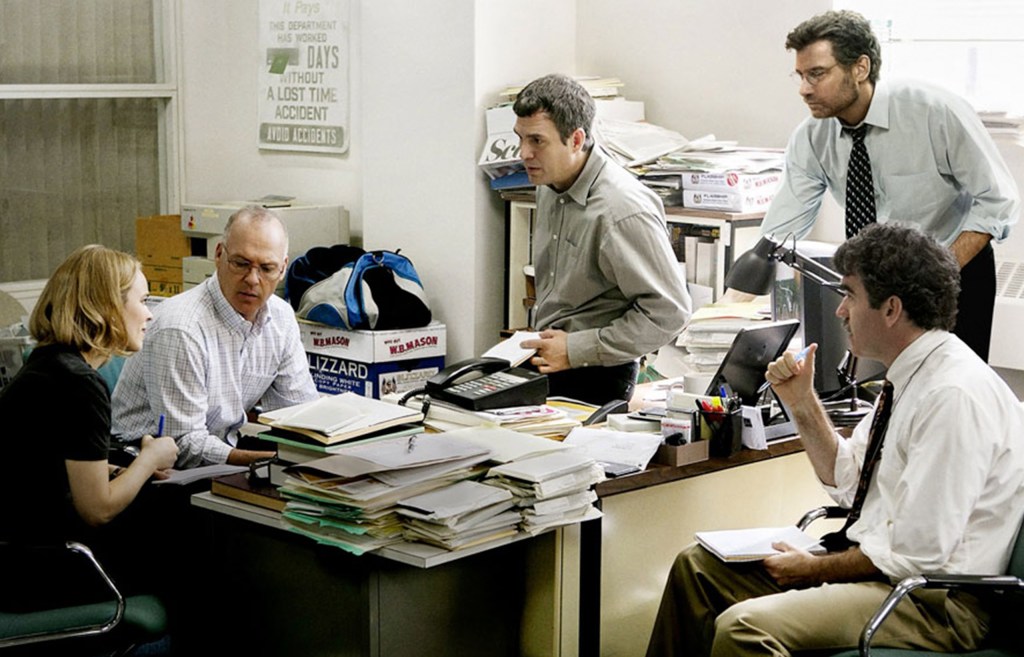
Journalists, I have learned in my classes, are obliged by unwritten ethical codes: to remain objective in their writing; seek balance when reporting; attribute ideas to whoever first said them. In Spotlight, a bunch of Boston Globe newswriters entangle themselves in a story about how the Roman Catholic Church covered up cases of sexual abuse in multiple parishes. This ‘Spotlight’ team, led by editor Walter Robinson (Michael Keaton) and writer Mike Rezendes (Mark Ruffalo), commit themselves to telling their community the unabridged truth. Through this investigation, each character is able to validate their love for Boston and their jobs.
Camp taught me that every individual, even goofy young balls of energy, possesses a passion for something. I want to be a watchdog and a storyteller, like these reporters, driven by a desire to right wrongs through the magnificent power of written word and honesty. Movies like Spotlight help you understand what you stand for.
 Matt Schwartz